
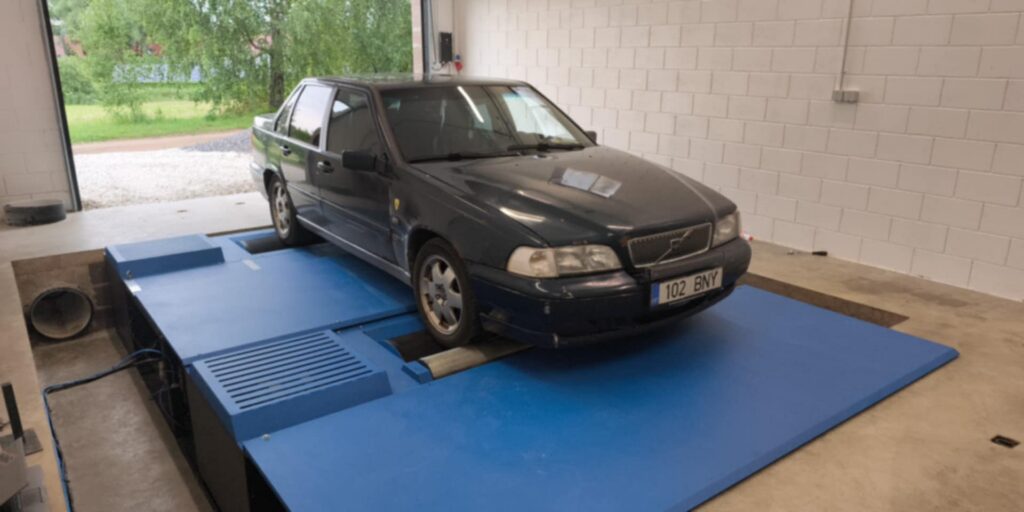
We use a Sportsdevice SDC655 four-wheel drive dyno. The dyno can be used in front, rear and four-wheel drive mode. The axles can be mechanically disconnected/connected if necessary. The wheelbase can be adjusted between 2230 and 3050mm. The dyno can be used in regular inertia mode, in “ramp” mode with brakes, and if necessary, with electric brakes to hold the engine at a fixed speed regardless of the load. To add load, the bench is equipped with two CFK-500 retarders, which allow the application of up to 8000Nm of braking force if necessary.
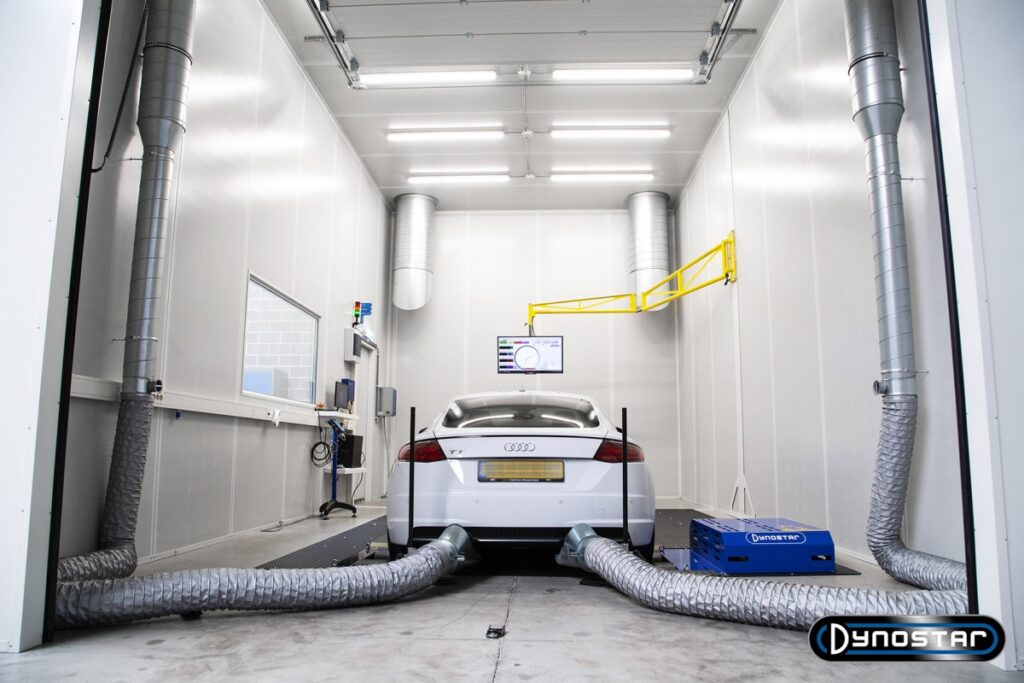
When building the dyno room, we have also put a lot of effort on well-functioning ventilation. The throughput capacity of the ventilation system has been calculated to allow up to 60,000 cubic meters of air per hour, or one million liters per minute. In addition, there is an exhaust gas extractor with a capacity of 10,000 cubic meters per hour. The extractor has a total of three outputs to allow the collection of exhaust gases from both, the ends of the exhaust system and, if necessary, from the “wastegate” valve directed to the atmosphere. Thanks to this, we are able to keep the air in the room clean throughout the entire dyno session.
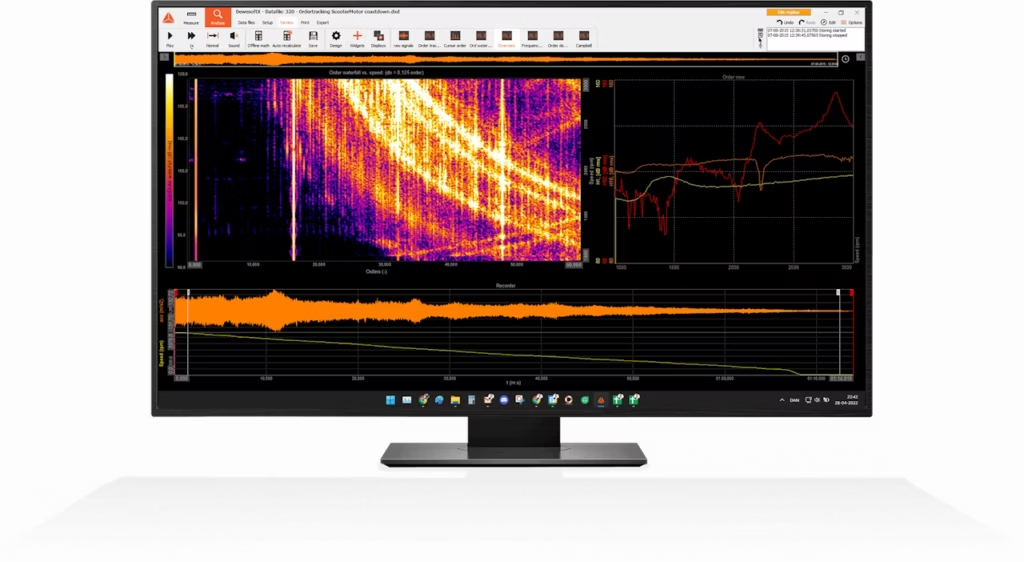
If necessary, our stand is also equipped with many sensors and devices that allow us to display and log important information about the engine during tuning.
- Plex Knock monitor V3 – datalog + audio output
- 2x Motec LTC LSU 4.9 Bosch wideband sensors
- 4x EGT sensors
- 5 bar map sensor
- 10 bar backpressure sensor
- IAT
- OBD2
- 5 universal analog inputs
- 8 universal digital inputs
- CAN-BUS input

In addition to cars, our stand also has a special fixture that can be used to measure and tune motorcycles.
Reminder for using the dyno
- The car that is brought to dyno must have a sufficient amount of fresh fuel for tuning.
- The car must have summer or all-season tires on the dyno. Vehicles with studded tires will not be allowed into the dyno.
- Since our dyno allows for measuring up to 340km/h, the tire's speed index must also correspond to the speed up to which it is planned to reach during tuning.
- The vehicle must not have any oil, coolant, fuel or other leaks.
- For very low clearance vehicles it is wise to discuss with us before coming to the dyno about possible attachment points. On some cases bumpers or other body parts may have to be removed to allow strapping the car properly to the dyno.
- If you wish to use the sensors we offer for logging in the dyno, it is wise to consult with us under what conditions they can be attached to your vehicle before arriving at the dyno.
- During the winter period, the car must be brought to our workshop no later than the previous evening to melt. It would also be strongly recommended to visit the Vahi self-service car wash “Estakaadi tn 12” immediately before bringing the car, where it is possible to wash the underside of the vehicle yourself for an affordable price. That way the winter salt and sand will not damage the bearings of our dyno.
- In the event of major leaks or catastrophic engine failures, a cleaning service will be added to the rental price of the dyno stand at a later date based on an hourly rate ( see the price).